Enhancing the shopping experience for mobile and home services at Entel.
Description
Entel is one of the most important telecommunications company in Chile. Its service portfolio includes information technology services, mobile and fixed telephony, long-distance carriers, among others.
Role and Team
Product Designer together with another PD - and a UX Researcher

Type
Ecommerce - Web App

Client
Entel - Chilean Telecommunication Company
Date
2024
16
To kick things off, we partnered with leadership to have the big picture. This feature would contemplate the following requirements:
Based on previous data collected by research team, we came up with some hypothesis that would shape the experience.
- If users have an intermediate cart they will be able to confirm the products before proceeding with the purchase and add some other items, which would increase conversion rate and decrease cart abandonment.
- If we include the possibility to get products and services from different catalogs, users will perceive the flow much easier because they do not have to make independent purchase flows.
- If we give the possibility to recover the purchase in case of abandoning the cart users will finish the process and this will decrease cart abandonment rate.
Problem
There was no way for users to bundle mobile equipment, plans, and home services into one checkout. Each product required its own flow, multiplying effort and creating unnecessary drop-off points along the way.
Design outcomes
- Streamlined the purchase flow into a single unified process, giving customers seamless access to the full catalog of products and services.
- Reduced cart abandonment by enabling users to save and recover incomplete purchases, directly addressing one of the most common drop-off points in this industry.
- Strengthened customer retention by introducing differentiated benefits for logged in users.
- Delivered a personalized shopping experience by tailoring product recommendations and purchase flows based on user profiles, laying the groundwork for more targeted cross-selling and higher lifetime value.
NN
User without navigation data or identification within the system.
Prospect
Potential customer
Customer
Identified user with previous or purchases within the platform.
Key Insights
- Users lost progress and context when purchasing across categories.
- Existing customers expected recognition.
- The flow broke when complexity increased.
To validate these initial concepts, we conducted some testing.
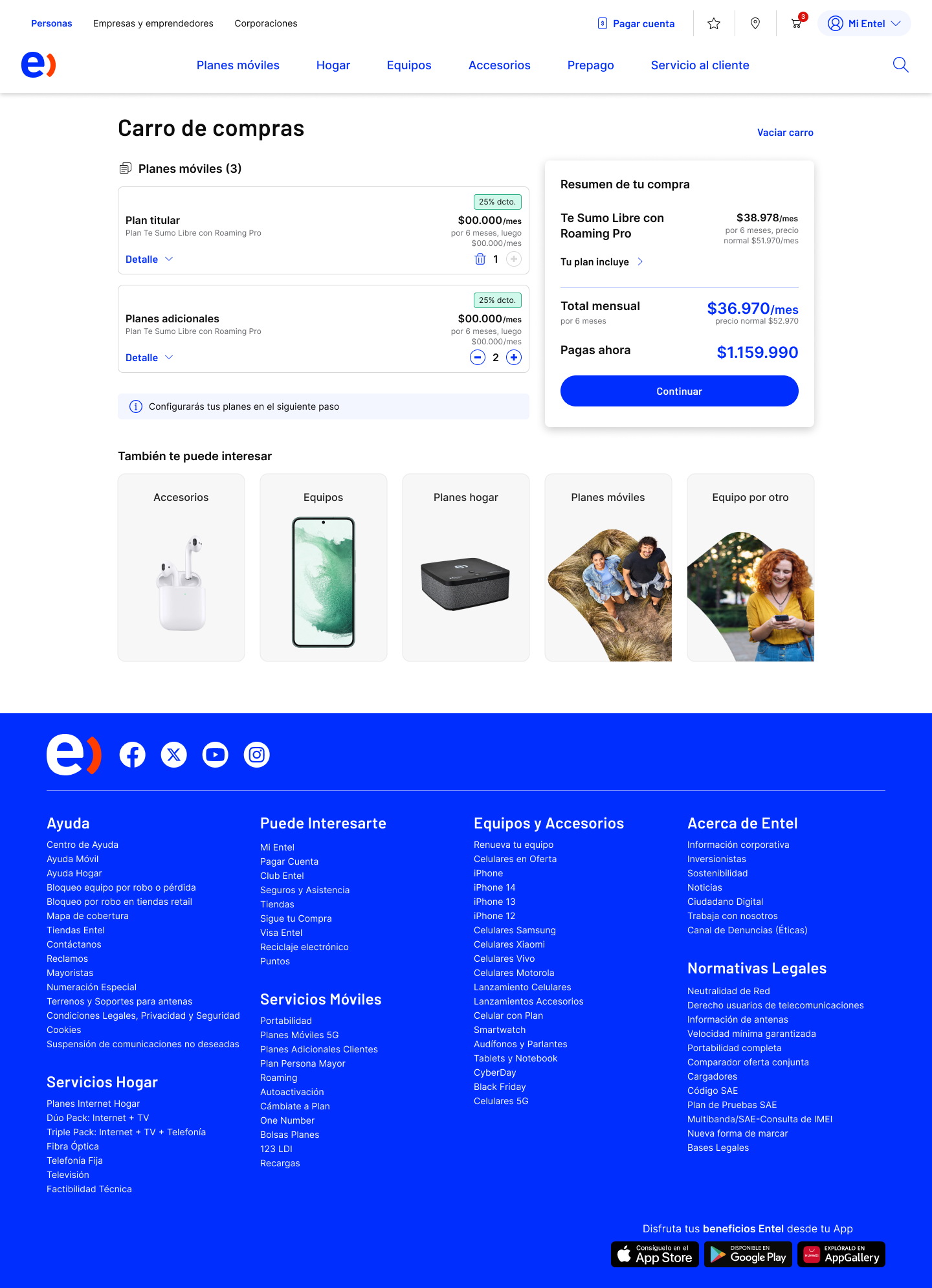
- Summary shopping cart didn’t add too much value to users because beyond being able to edit the products, they didn’t see to much difference compared to the full shopping cart.
- Some price information wasn’t clear enough and affected the interpretation of the immediate total payment.
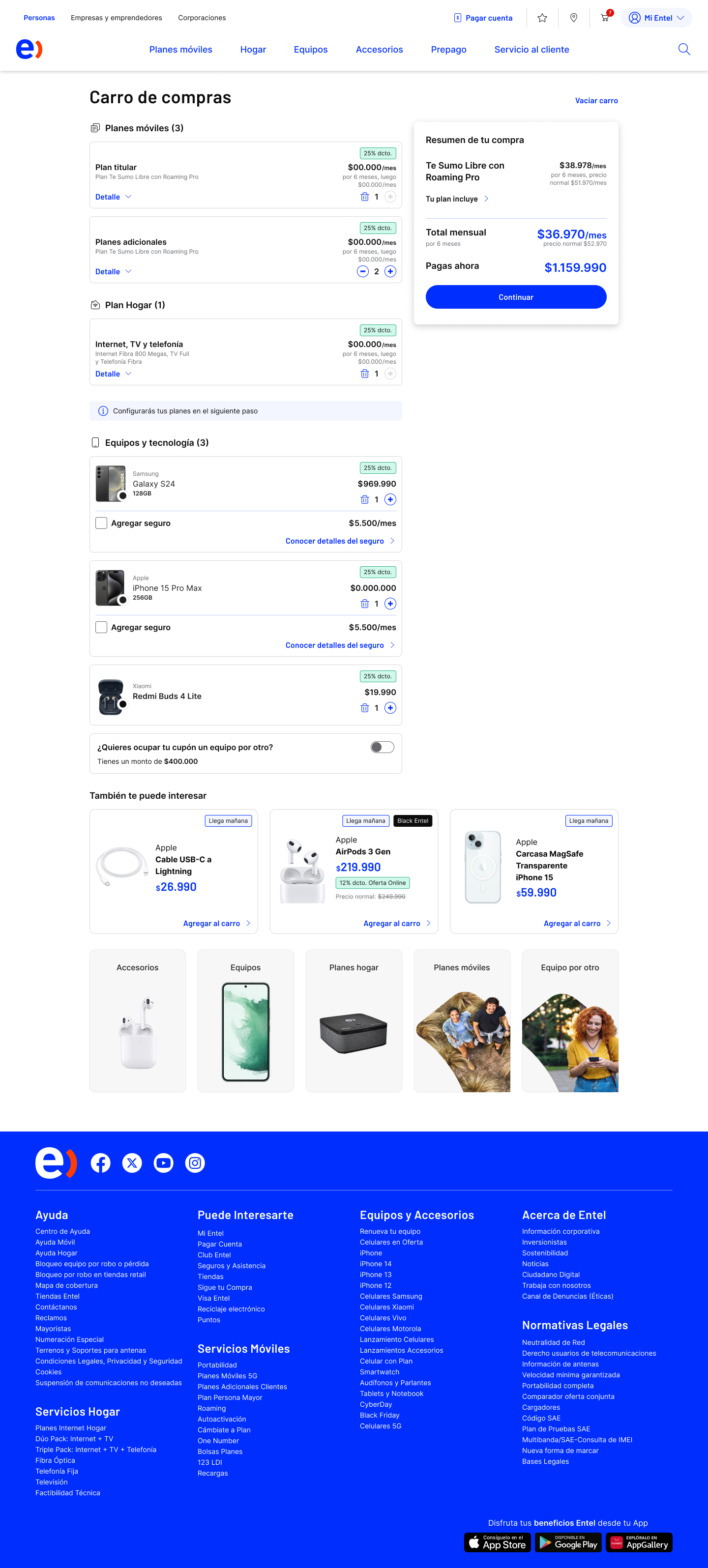
- The information included in the cart structure offers a clear idea of what the user is adding to the basket.
- Cross selling would be valuable mainly to add complementary products.
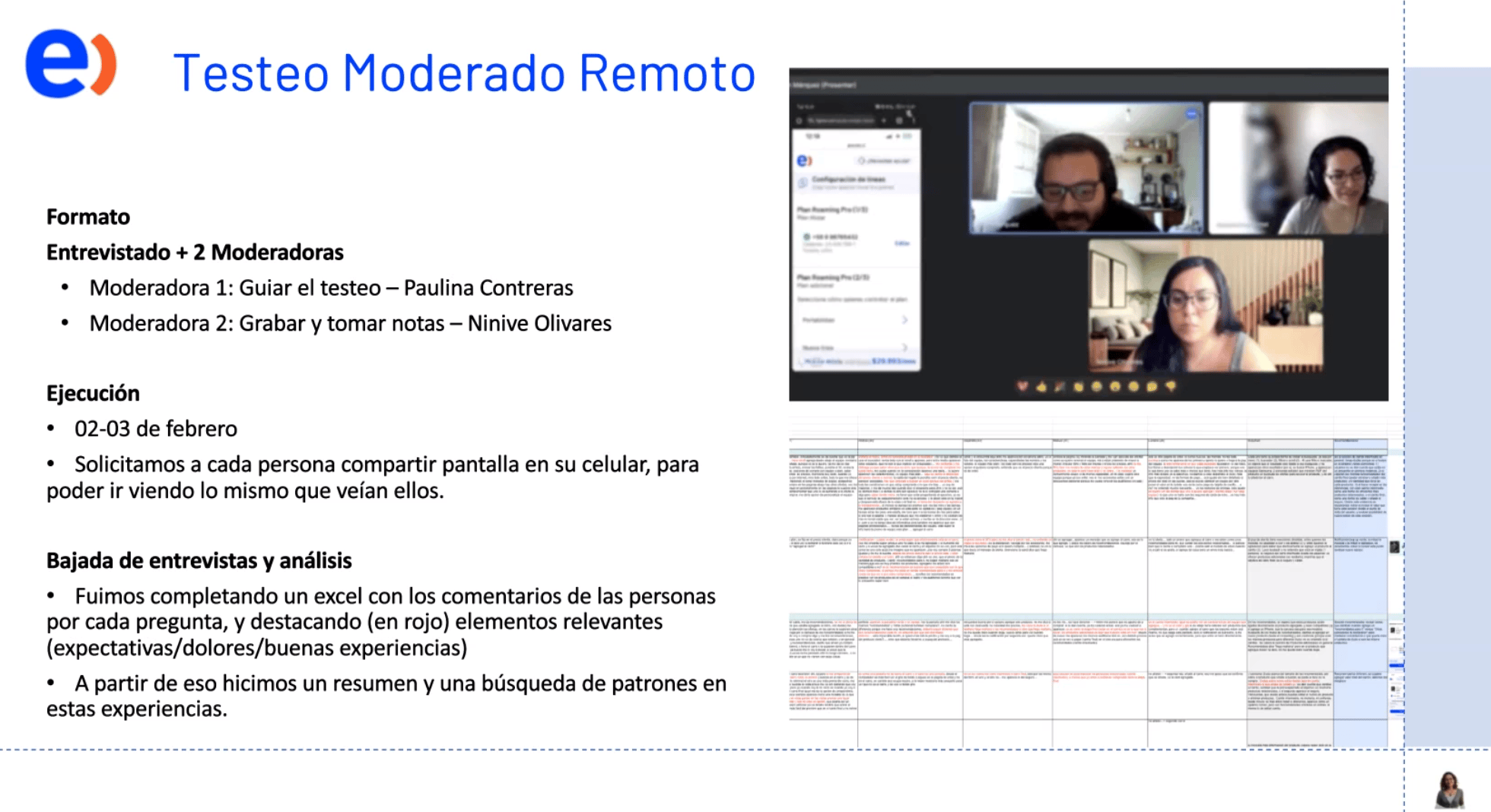
To validate these initial concepts, we conducted some testing. Here’s what we found:
Adding a mobile phone and data plan to the cart
Review the cart summary and identify all items selected before proceeding to checkout.
Processing and understanding of information associate to payment
Adding additional related items to the existing shopping cart.

Mobile equipment
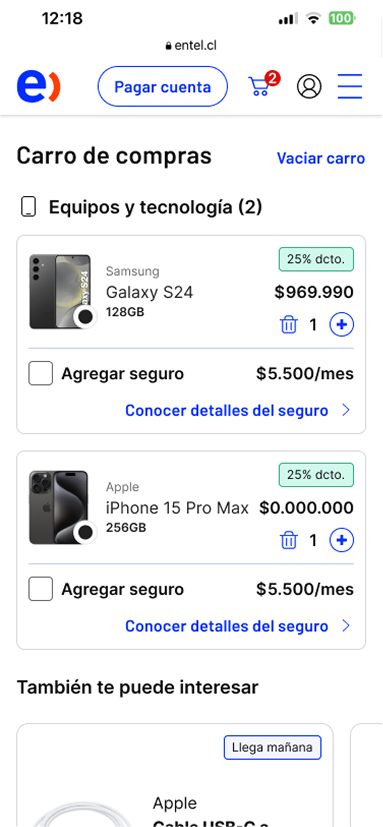

Cross selling
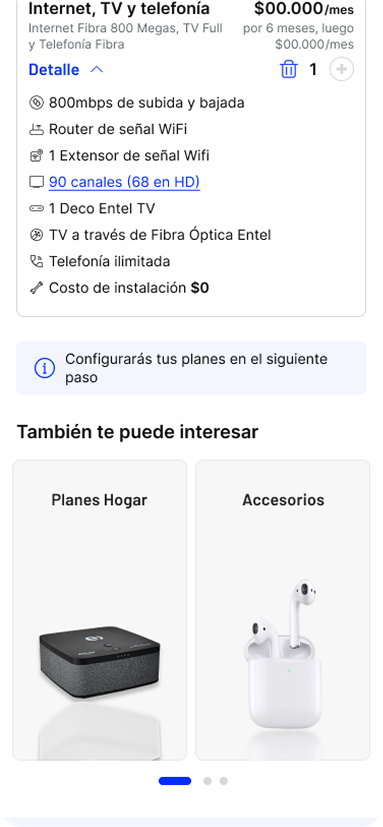
$22.990/mes
Mobile plans
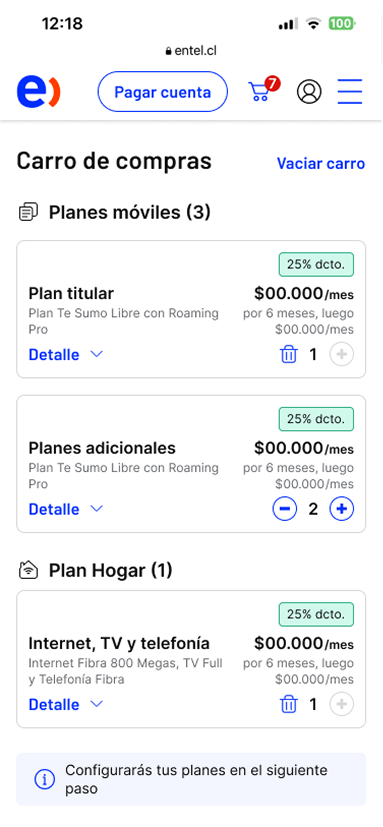
$1.200.000
$12.740/mes
Home plans
$22.990/mes





$1.020.000
$1.020.000
$18.970/mes
$9.450/mes
$12.970/mes
$15.300/mes
$12.970/mes
$11.200/mes
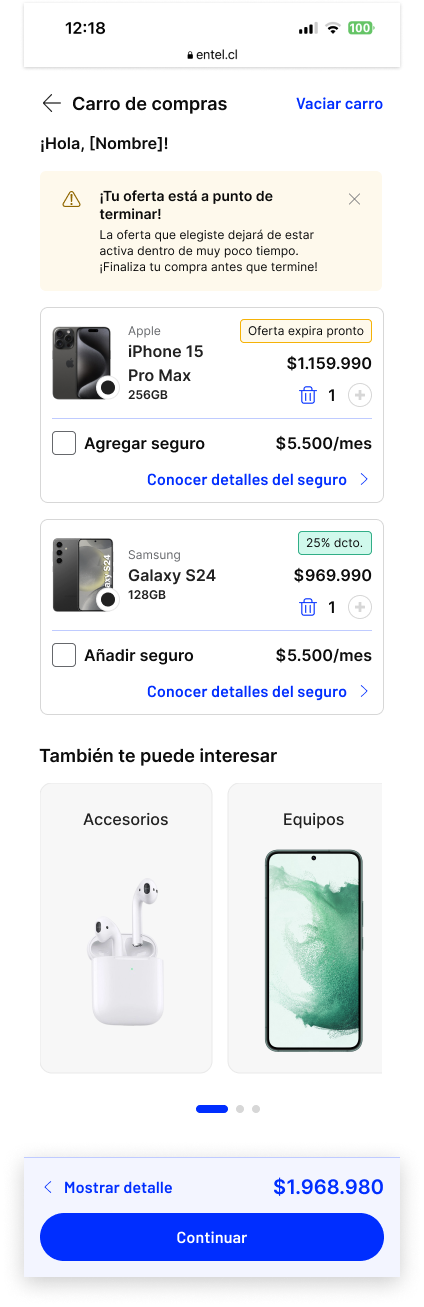
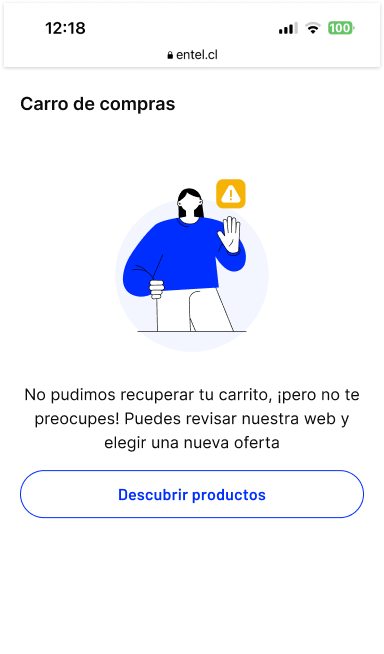
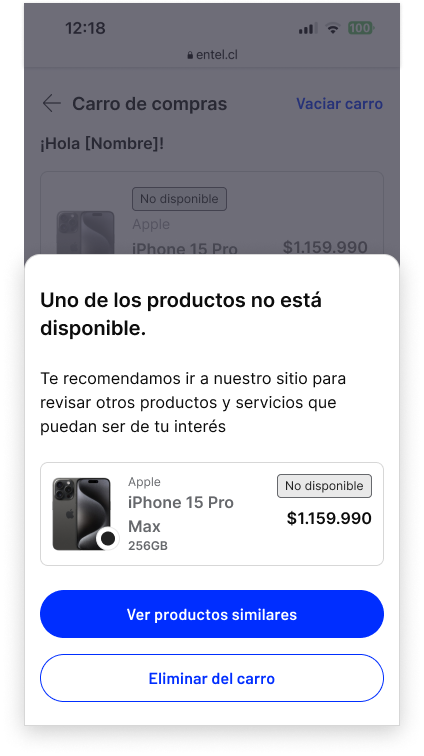
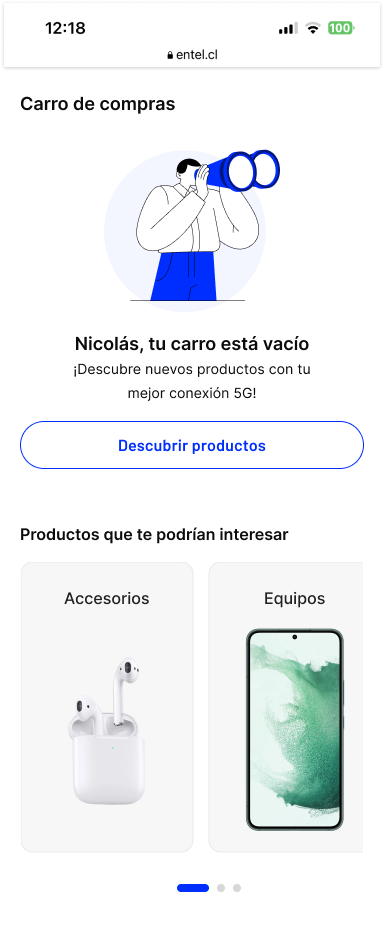
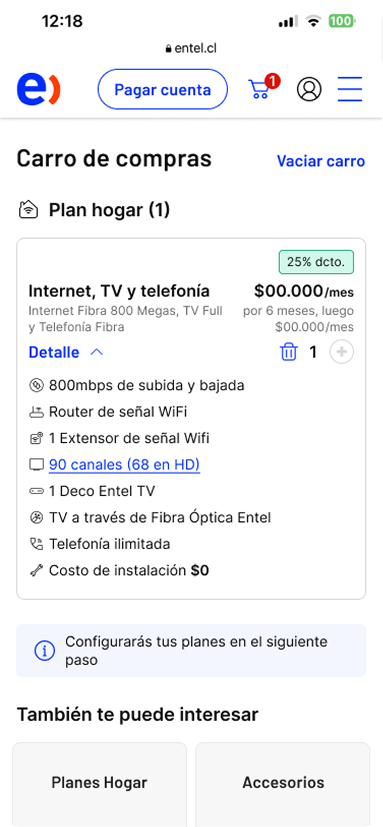
Edge cases were handled to keep users on track regardless of context; expiring offers, incomplete purchases, unavailable products, or an empty cart each received a tailored state that guided users toward action rather than abandonment.

$1.200.000
$39.740/mes
$18.990/mes

Let’s work together!!
Get in touch
danielarboledamanyoma@gmail.com
Connect on LinkedIn
Daniel Arboleda
previous project
Generating personalized social media content through AI driven agent profiling.
show case study

We sat down with research team to understand more about the current user experience.



$1.020.000
$18.970/mes
$9.450/mes
$12.970/mes
$15.300/mes
$12.970/mes
$11.200/mes
Enhancing the shopping experience for mobile and home services at Entel.
Description
Entel is one of the most important telecommunications company in Chile. Its service portfolio includes information technology services, mobile and fixed telephony, long-distance carriers, among others.
Role and Team
Product Designer together with another PD and a UX Researcher

Type
Ecommerce - Web App

Client
Entel - Chilean Telecommunication Company
Date
2024
16
To kick things off, we partnered with leadership and research team to have the big picture.
Based on previous data collected by research team, we came up with some hypothesis that would shape the experience.
- If users have an intermediate cart they will be able to confirm the products before proceeding with the purchase and add some other items, which would increase conversion rate and decrease cart abandonment.
- If we include the possibility to get products and services from different catalogs, users will perceive the flow much easier because they do not have to make independent purchase flows.
- If we give the possibility to recover the purchase in case of abandoning the cart users will finish the process and this will decrease cart abandonment rate.
Problem
This work was part of a larger initiative. However, to what corresponds to my scope in this project, there were a problem from business perspective where Entel offers mobile equipments, plans, and home services, but each required a separate purchase flow, creating also that users have no way to get these products and services into one checkout. The design challenge was to create a single converged checkout that could handle that complexity without overwhelming users or losing them in the process.
After some iterations, we started moving into a more polished version of the experience.
Some components were sourced from the existing Design System, while others were created from scratch. Defining these components involved collaboration and feedback from other design colleagues, ensuring that many of them would have cross-functional use throughout the platform.
Design outcomes
- Streamlined the purchase flow into a single unified process, giving customers seamless access to the full catalog of products and services.
- Reduced cart abandonment by enabling users to save and recover incomplete purchases, directly addressing one of the most common drop-off points in this industry.
- Strengthened customer retention by introducing differentiated benefits for logged in users.
- Delivered a personalized shopping experience by tailoring product recommendations and purchase flows based on user profiles, laying the groundwork for more targeted cross-selling and higher lifetime value.
NN
User without navigation data or identification within the system.
Prospect
Potential customer
Customer
Identified user with previous or purchases within the platform.
Key Insights
- Users lost progress and context when purchasing across categories.
- Existing customers expected recognition.
- The flow broke when complexity increased.
To validate these initial concepts, we conducted some testing.
- Summary shopping cart didn’t add too much value to users because beyond being able to edit the products, they didn’t see to much difference compared to the full shopping cart.
- Some price information wasn’t clear enough and affected the interpretation of the immediate total payment.
- The information included in the cart structure offers a clear idea of what the user is adding to the basket.
- Cross selling would be valuable mainly to add complementary products.
To validate these initial concepts, we conducted some testing. Here’s what we found:
Adding a mobile phone and data plan to the cart
Review the cart summary and identify all items selected before proceeding to checkout.
Processing and understanding of information associate to payment
Adding additional items to the existing shopping cart

Let’s work together!!
Get in touch
danielarboledamanyoma@gmail.com
Connect on LinkedIn
Daniel Arboleda
Mobile equipment
Cross selling
$22.990/mes
Mobile plans
$1.200.000
$17.900/mes
Home plans
$22.990/mes
previous project
Generating personalized social media content through AI driven agent profiling.
show case study


Product Designer
ABOUT ME
GET RESUME
$1.200.000
$39.740/mes
$18.990/mes
$1.020.000
$18.970/mes
$9.450/mes
$12.970/mes
$15.300/mes
$12.970/mes
$11.200/mes
Edge cases were handled to keep users on track regardless of context; expiring offers, incomplete purchases, unavailable products, or an empty cart each received a tailored state that guided users toward action rather than abandonment.
We sat down with research team to understand more about the current user experience.

Let’s work together!!
Get in touch
danielarboledamanyoma@gmail.com
Connect on LinkedIn
Daniel ArboledaEnhancing the shopping experience for mobile and home services at Entel.
Description
Entel is one of the most important telecommunications company in Chile. Its service portfolio includes information technology services, mobile and fixed telephony, long-distance carriers, among others.
Role and Team
Product Designer together with another Product Designer and a UX Researcher

Type
Ecommerce - Web App

Client
Entel - Chilean Telecommunication Company
Date
2024
16
To kick things off, we partnered with leadership and research team to have the big picture.
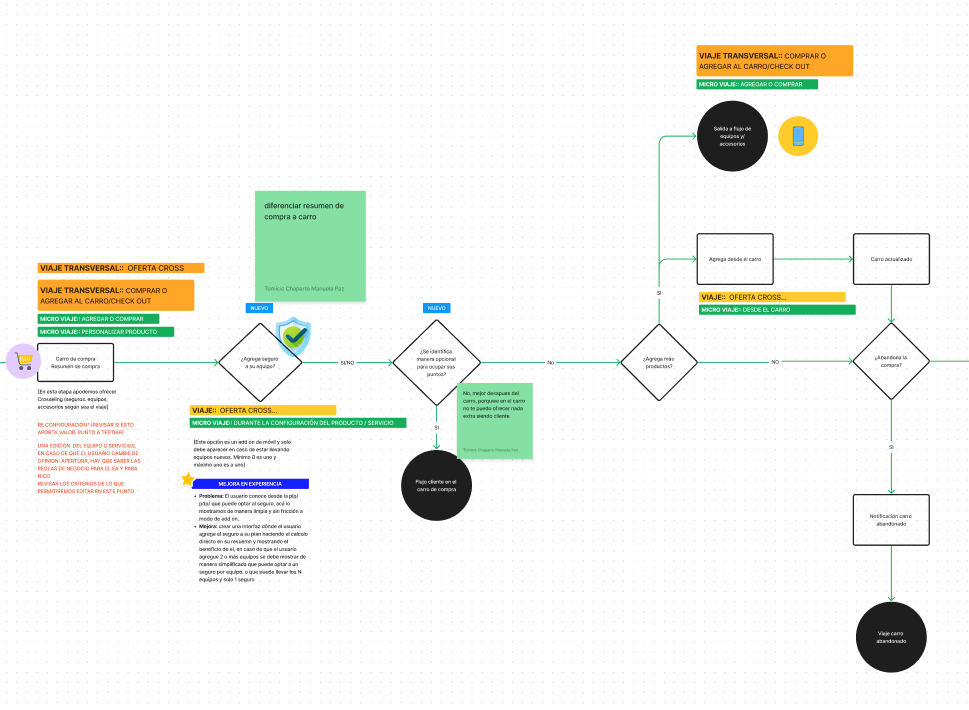
Based on this, Product team suggested the following hypothesis that would shape the initial experience.
- If the user have the possibility to add products and services from different catalogs, we are gonna reduce friction to the users because they do not have to make single purchase flows.
- If we give the possibility to recover the purchase in case of abandoning the cart users will finish the process and this will decrease cart abandonment rate.
Problem
This work was part of a larger initiative. However, to what corresponds to my scope in this project, there were a problem from business perspective where Entel offers mobile data plans, home services, equipment and accessories as part of its catalog but each required a separate purchase flow, creating also that users have no way to get these products and services into one checkout. The design challenge was to create a single converged checkout that could handle that complexity without overwhelming users or losing them in the process.
After some iterations, we started moving into a more polished version of the experience.
Some components were sourced from the existing Design System, while others were created from scratch. Defining these components involved collaboration and feedback from other design colleagues, ensuring that many of them would have cross-functional use throughout the platform.
$1.020.000
Design outcomes
- Streamlined the purchase flow into a single unified process, giving customers seamless access to the full catalog of products and services.
- Reduced cart abandonment by enabling users to save and recover incomplete purchases, directly addressing one of the most common drop-off points in this industry.
- Strengthened customer retention by introducing differentiated benefits for logged in users.
- Delivered a personalized shopping experience by tailoring product recommendations and purchase flows based on user profiles, laying the groundwork for more targeted cross-selling and higher lifetime value.
NN
User without navigation data or identification within the system.
Prospect
Potential customer
Customer
Identified user with previous or purchases within the platform.
Key Insights
- Users tend to lost progress and context when purchasing across categories.
- Existing customers expected recognition.
- The flow broke when complexity increased.
The research team carried out a usability testing with 12 users, for analyzing purchase and configuration stages. The purchase test request the users to achieve the following goals through some scenarios.
Select a phone and data plan and add both to the cart
Review the cart summary and identify all items selected before proceeding to checkout.
Interpret the payment breakdown and evaluate complementary services at the checkout stage.
Adding additional related items to the existing shopping cart.
Here’s what we learned:
- Summary shopping cart didn’t add too much value to users because beyond being able to edit the products, they didn’t see to much difference compared to the full shopping cart.
- The information included in the cart structure offers a clear idea of what the user is adding to the basket.
- Some price information wasn’t clear enough and affected the interpretation of the immediate total payment.
- Cross selling would be valuable mainly to add complementary products. E.g. Mobile phone and headphones.
Adaptation of content according to user profile. Left to right: NN, prospect, customer.
Mobile equipment
$1.200.000
Cross selling
$22.990/mes
Mobile plans
$9.700/mes
$39.760/mes
$17.900/mes
$43.300/mes
$12.740/mes
$22.990/mes
Home plans
$17.900/mes
$22.990/mes
$1.020.000
$12.970/mes
$9.450/mes
$18.550/mes
$12.970/mes
$15.300/mes
$11.200/mes
$23.785/mes
Edge cases were handled to keep users on track regardless of context; expiring offers, incomplete purchases, unavailable products, or an empty cart each received a tailored state that guided users toward action rather than abandonment.
$1.200.000
$7.990/mes
$10.740/mes
$18.990/mes
Product Designer
ABOUT ME
GET RESUME